Like actors, architects sometimes run in dynasties – for instance the descendants of Charles James Blomfield, Bishop of London (1786–1857).
The bishop’s fourth son Arthur William Blomfield (1829–99) was a prolific if uninspiring church architect, designing mostly in the Gothic style. However, his largest work in West Sussex, the former Graylingwell Hospital (built as the county lunatic asylum from 1897), was chiefly in the late-17th-century red brick and stone mode deriving from the work of Sir Christopher Wren and dubbed (by Sir Edwin Lutyens in a characteristically witty moment) ‘Wrenaissance’.
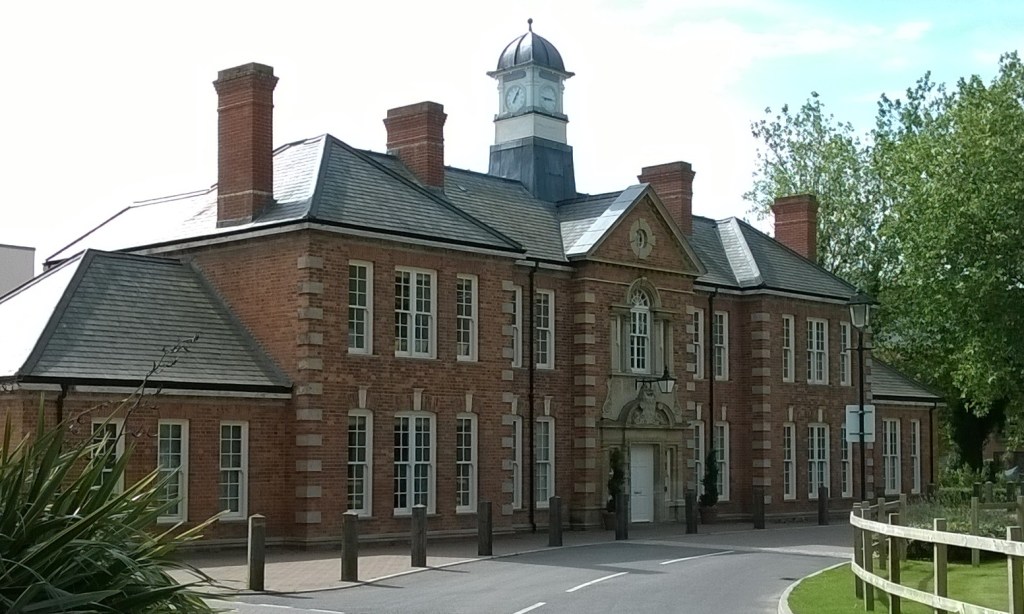
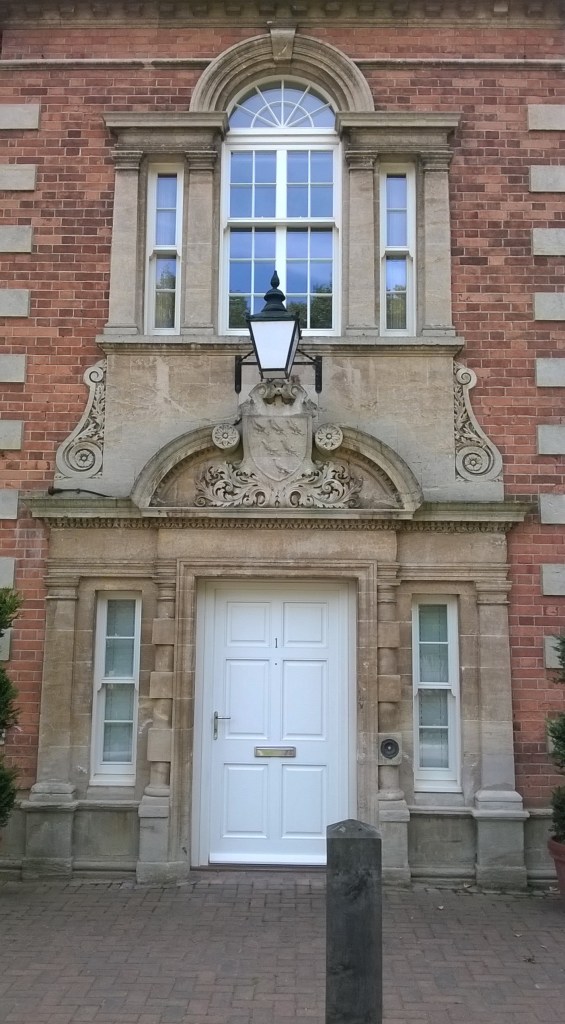
Equally prolific was Arthur William’s nephew Reginald Blomfield (later Sir Reginald) (1856–1942), whose early work was in similar style.
Stansted House on the edge of West Sussex near Rowlands Castle in Hampshire, rebuilt immediately after a massive fire in 1900, is ‘Wrenaissance’. It is similar to, though not a copy of, its late-17th-century predecessor, resembling nearby Uppark (which itself succumbed to a major fire more recently).
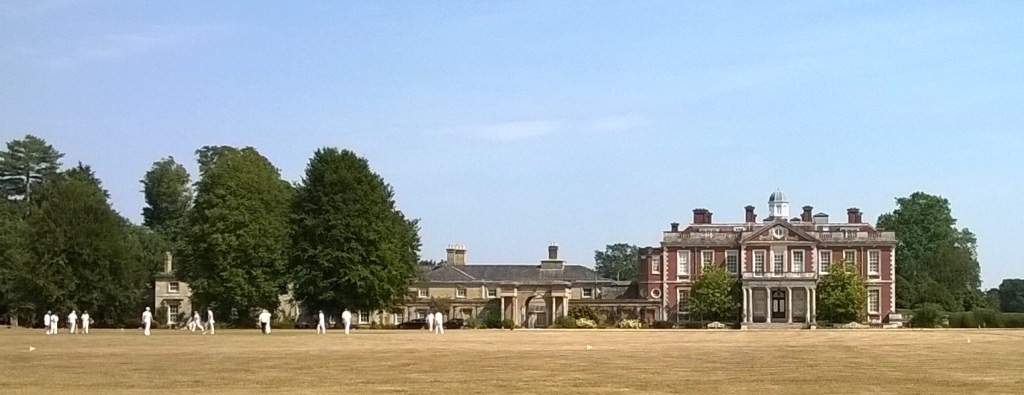
Not surprisingly, Stansted was once attributed to Reginald Blomfield; it is so credited in Ian Nairn and Nikolaus Pevsner, The Buildings of England: Sussex (1965).
Subsequently, the true architect was revealed to be the less well known Arthur Conran Blomfield (1863–1935), Arthur William’s son and Reginald’s cousin. The revised edition of ‘Pevsner’, published last year, corrects the mistake.
Arthur Conran Blomfield was also the architect at Sandringham House for King Edward VII. It may have been this role which led to the commission for the Stansted rebuilding.
Stansted House makes an impressive effect (the outbuildings to the north survived the fire and are late-18th-century and early-19th-century in date). Its west (entrance) front has fine sculptural detail including swags in its pediment above a stately projecting Ionic portico.
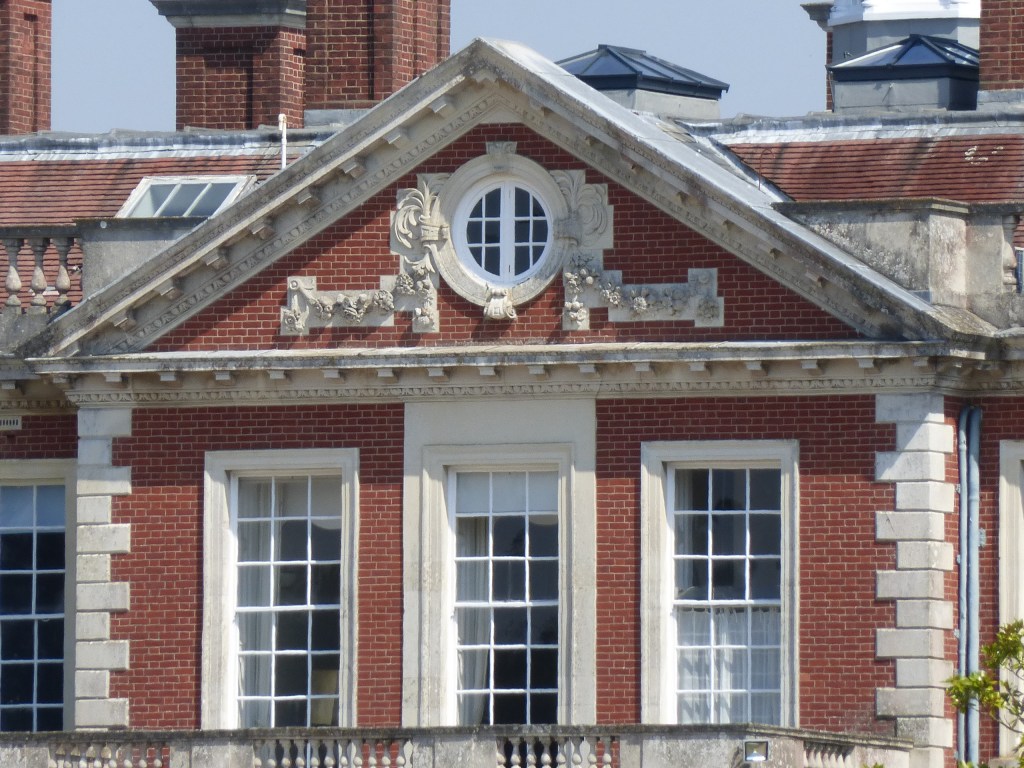
The portico is repeated on the rear (east) front.
Arthur Conran’s ornate interiors (normally open to the public, but temporarily closed) were largely toned down in the 1920s by the architect and author H S Goodhart-Rendel – who in his published work and comments incidentally demonstrated quite a loathing for Reginald Blomfield.
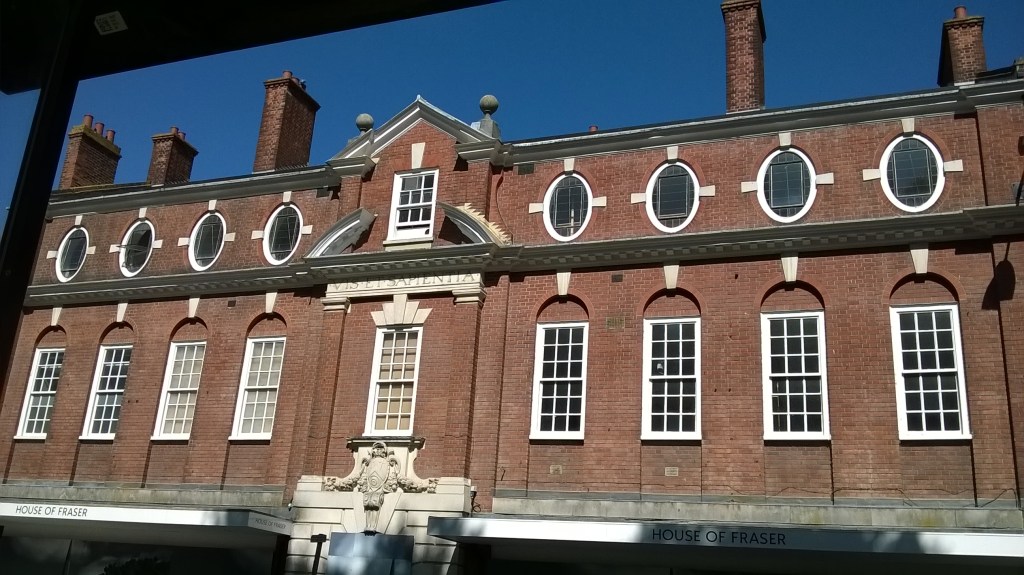
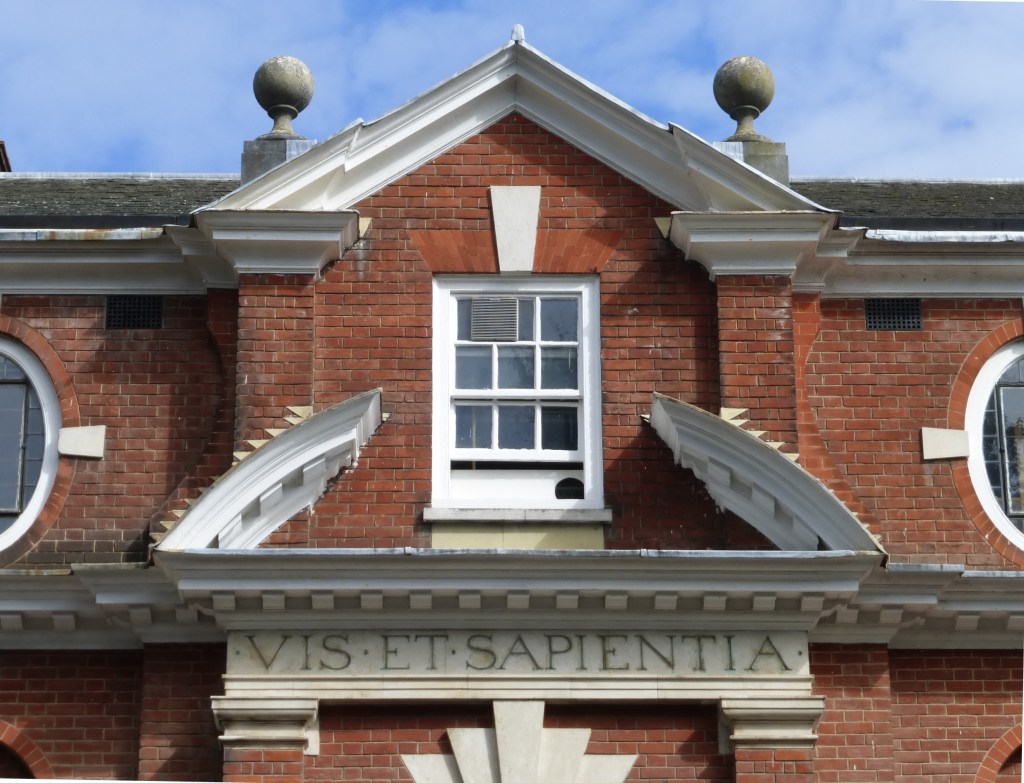
Reginald Blomfield himself did however work in West Sussex, designing in 1903–4 the new building for Oliver Whitby’s School inWest Street, Chichester. This too is in ‘Wrenaissance’ style, with Doric or Tuscan brick pilasters and both broken and open pediments above. It is a great ornament to the street, though empty since the House of Fraser department store recently moved out.
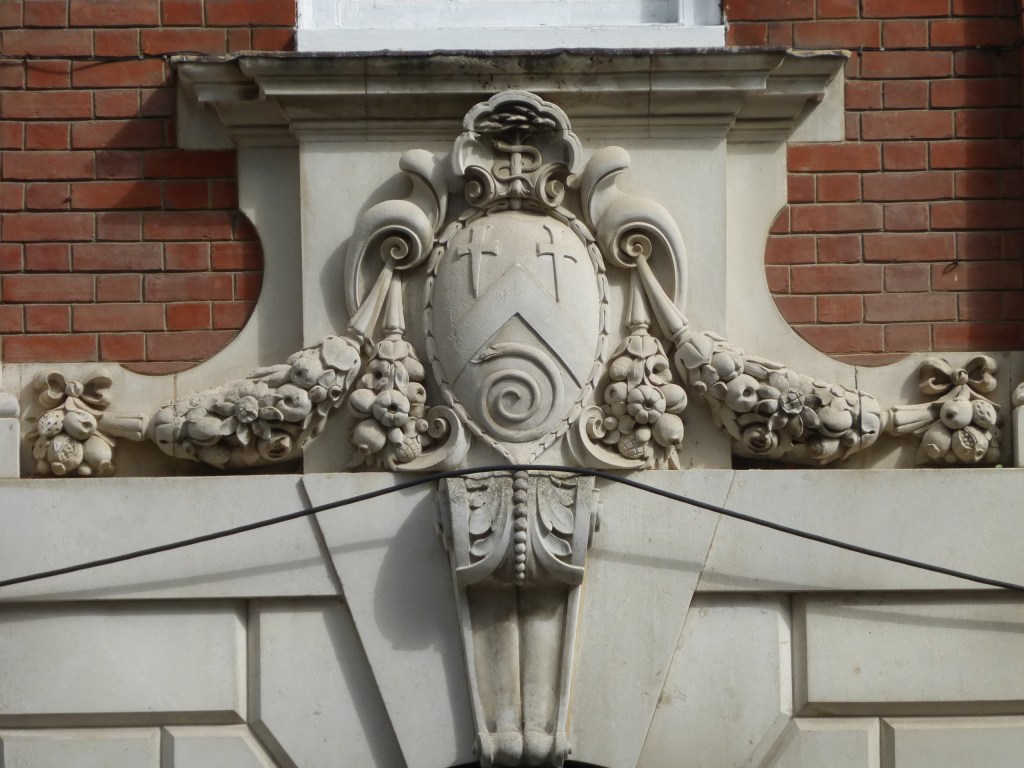
As a former ‘first’ in ‘Literae Humaniores’ (ie Greek and Latin Classics) at Oxford, Blomfield would have been pleased to feature prominently the school’s Latin motto ‘Vis et Sapientia’ (‘Strength and Wisdom’).
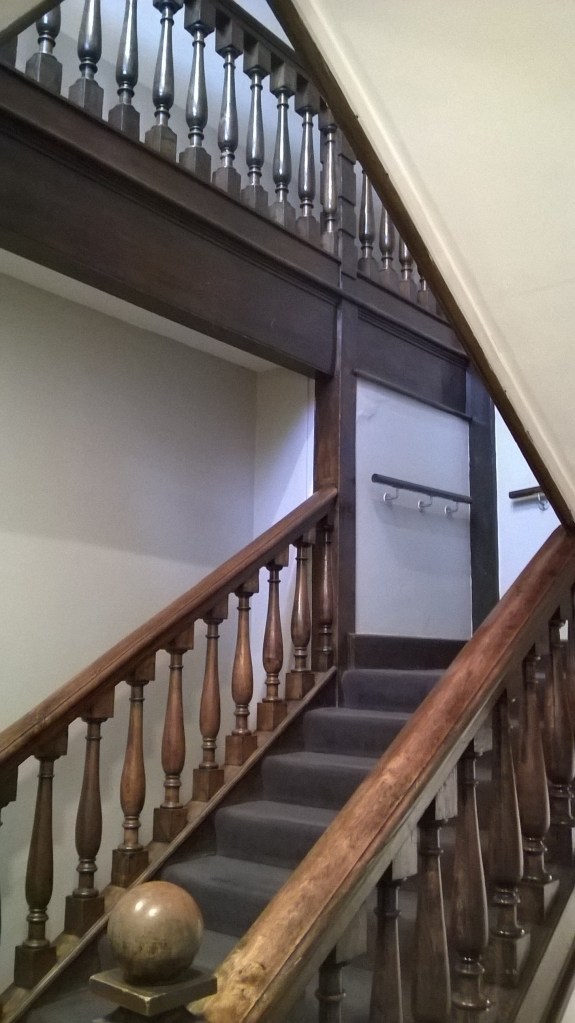
An internal oak staircase in the building is also in solid late-17th-century style, well adapted to frequent use by schoolboys.
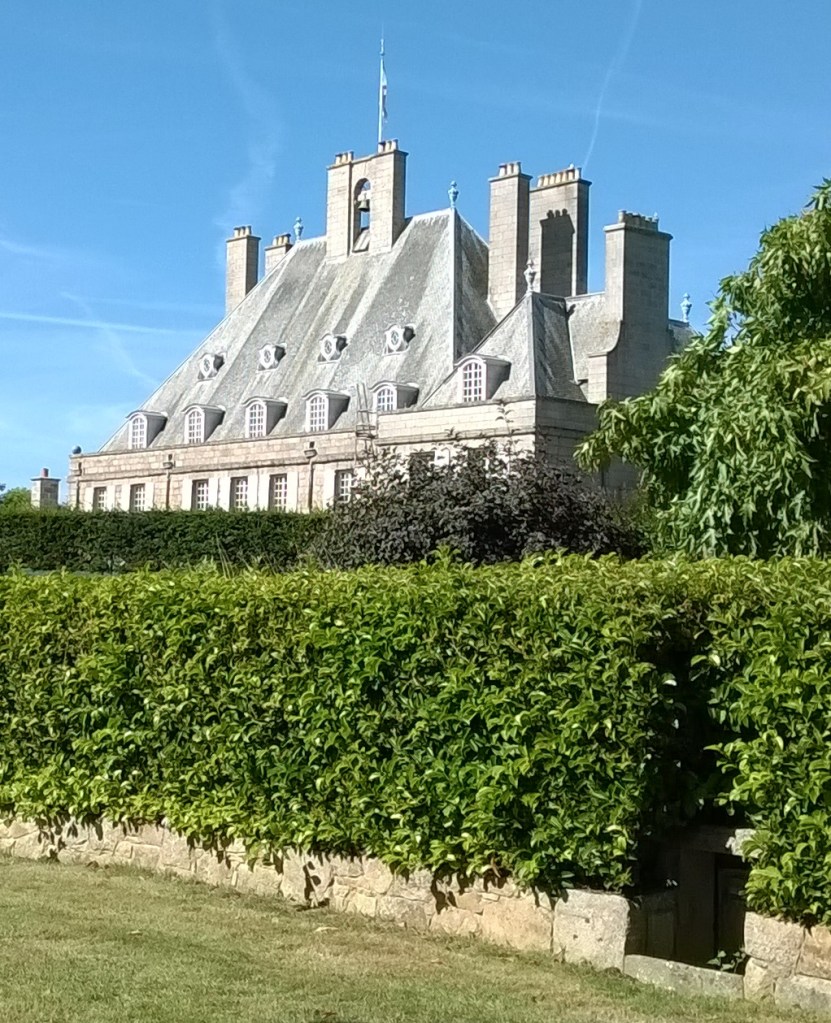
Reginald Blomfield’s later work often exemplified his scholarly interest in French architecture, on which he published an important book. Examples are the Manoir de la Trinité on Jersey of 1909-12, with a very tall roof in French style,
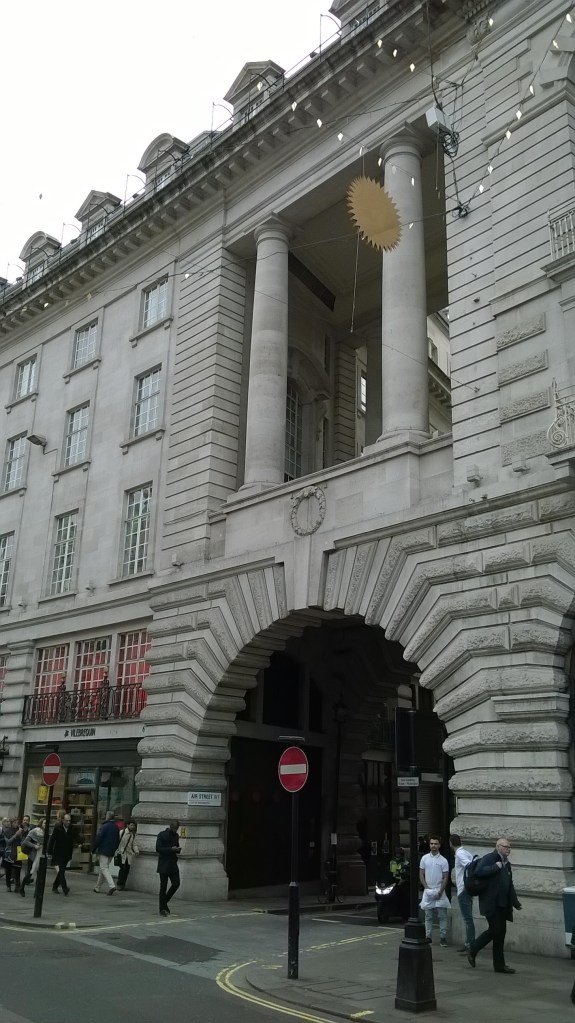
and the rebuilding in the 1920s of John Nash’s Quadrant in Regent Street in London next to Piccadilly Circus, with powerful use of stone rustication and giant columns.
Reginald Blomfield had already acquired a distaste for Gothic while working as his uncle Arthur William’s articled clerk. Later, having come to consider Classical styles the only proper way to build in the future, he became a ferocious opponent of architectural Modernism, then just emerging on the scene.
His slashing attack Modernismus (1934) (the German version of the word in the title makes the new style sound even more sinister) hasn’t always endeared him to posterity. ‘Pathetically polemical’ is Nicholas Taylor’s verdict on the book.
But Blomfield’s strictures certainly articulated what many people have felt, then and since, about the declared intention of Modernism’s more extreme proponents to annihilate the past. The book has never been reprinted in English; but rather surprisingly did appear in translation in the 1990s as an Italian paperback.
Images copyright Tim and Ann Hudson.
***********************************
Blog posts to come: Littlehampton; Worthing’s seaside; C G Stillman, County Architect; What is Classical architecture?


Not forgetting Reginald Blomfield’s First World War memorial at Portfield cemetery
LikeLike
Tim
An excellent piece . I am going over to Jersey soon so will look out for Chateau Blomfield!
Regards
Alan Green
LikeLike
Tim: I’m really enjoying these posts and look forward to the next ones. Best wishes, John.
LikeLike