Littlehampton at the mouth of the river Arun never seemed a predominantly Classical town as Bognor once did, though some of the buildings of Beach Town (the resort area at its south-east corner) were stuccoed in early-19th-century style. The old village centre lay inland, with (then) a small medieval church. Expansion during the 19th and early 20th centuries was mostly in red brick and tile in vernacular styles of architecture.
Classical elements in the town’s later buildings are thus not easy to spot.
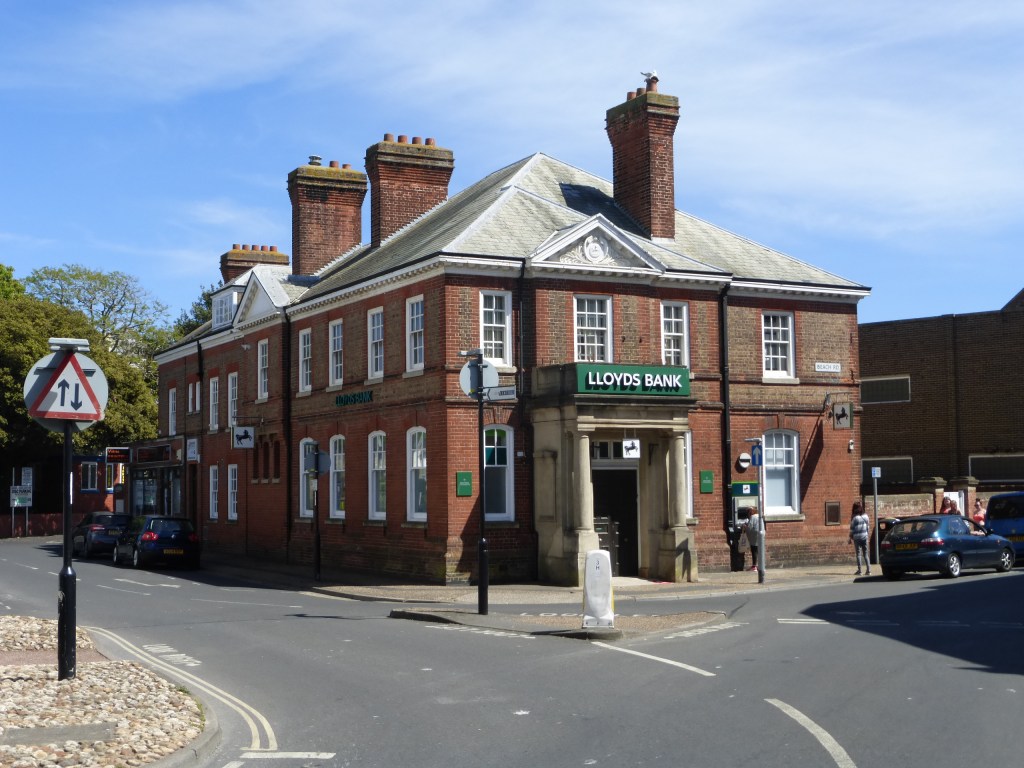
Just before 1900 the present Lloyds Bank at the east end of High Street introduced the neo-Georgian mode that later became common in this building type: plainness and solidity projected an appropriate sense of security and probity. There are two asymmetrical facades, each with a pediment, well suiting the site.
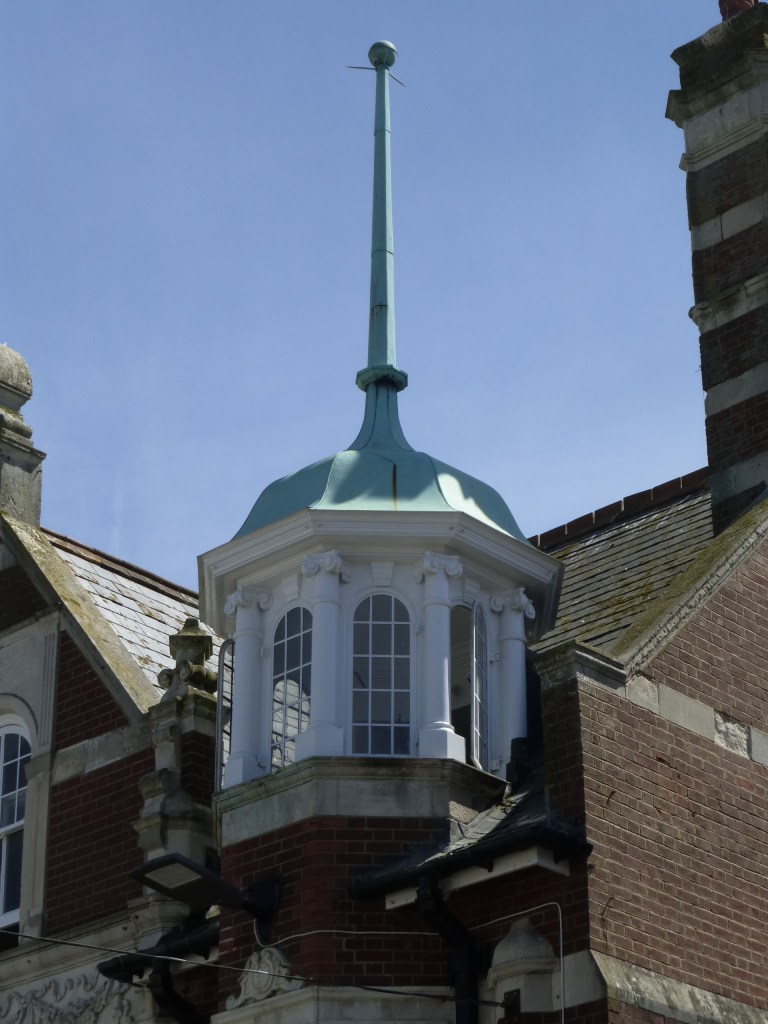
Further west in High Street the free-style former NatWest Bank of 1901–2 by Frederick Wheeler is more skittish,
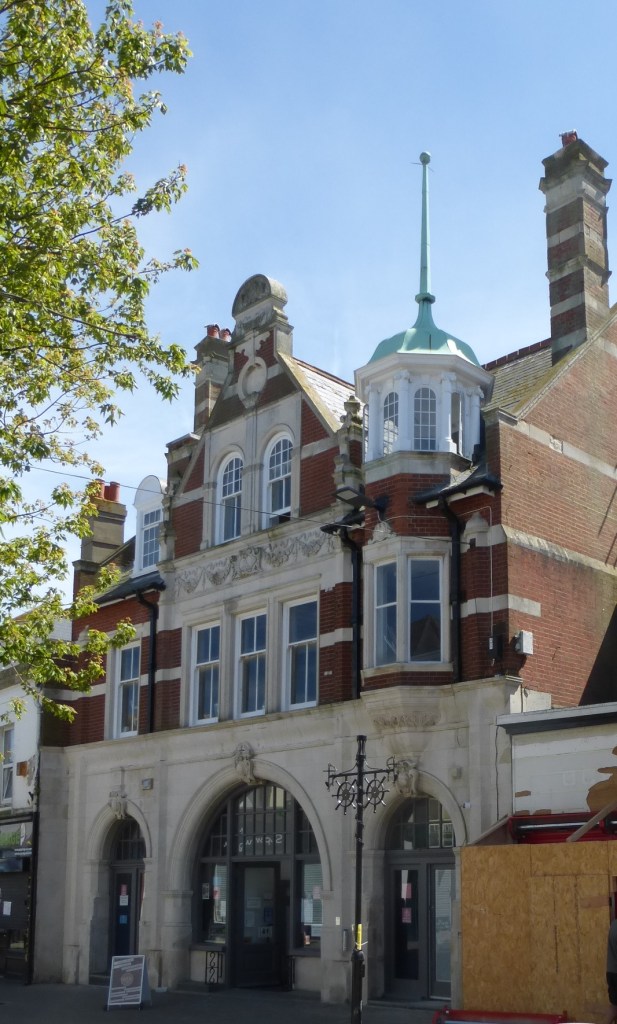
with fancy details including a corner cupola.
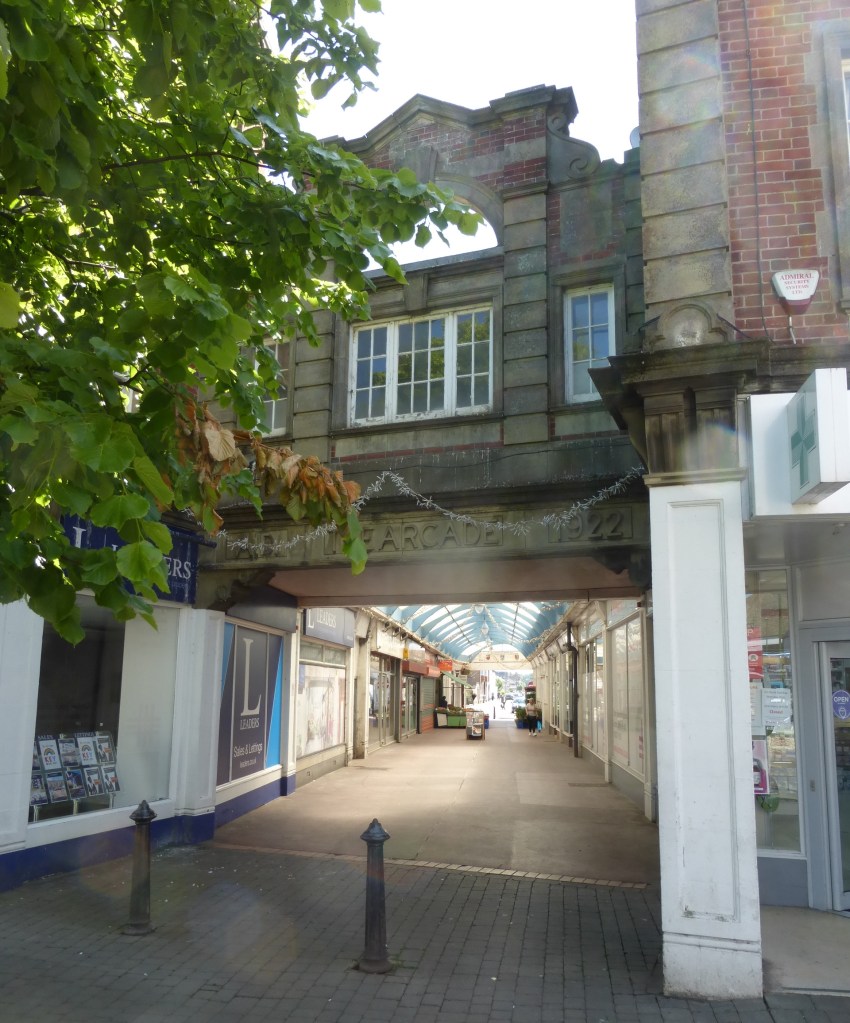
Post-War, the Classicism of the Arcade south of High Street, designed in 1922 by the firm of Wheeler & Godman, almost escapes notice because of the tree in front.
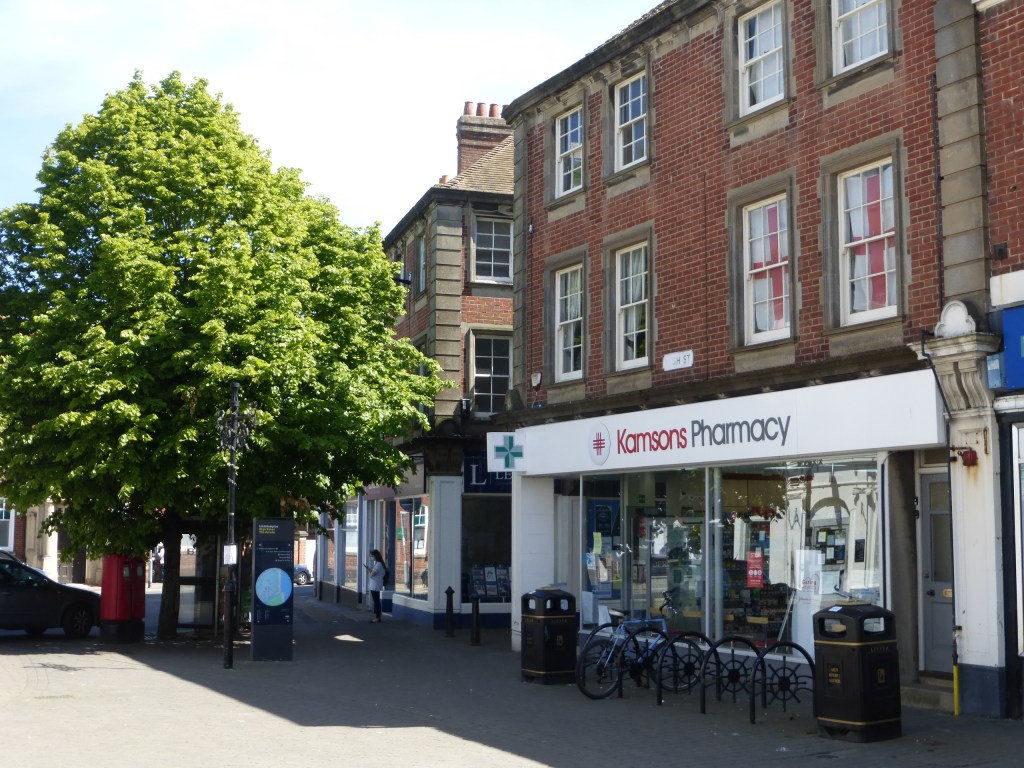
In ‘Wrenaissance’ style, its imposing frontispiece is flanked by plain blocks in stone and brick.
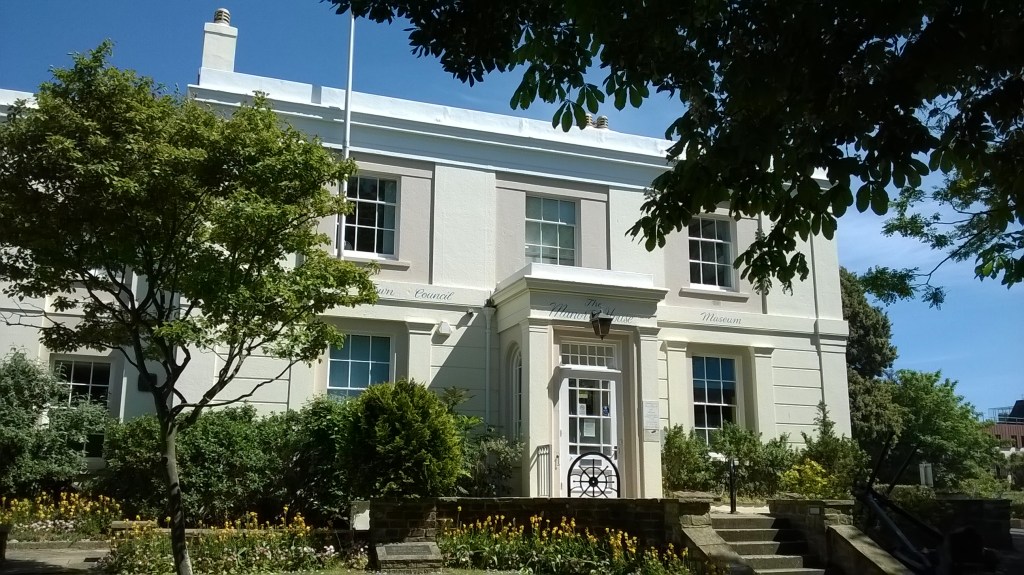
Later, in the early 1930s, the old Manor House in Church Street was newly incarnated as Littlehampton’s Urban District Council offices (it has since become the Museum). Alterations of 1933–4 matched the original building in style (plain Classical) and materials (stucco). So too did a mid-20th-century northern extension, though this unbalanced the façade as a whole.
More impressive at the same date was the rebuilding of the Dolphin Hotel in Surrey Street, the premier hostelry of the early-19th-century resort. Its architects Godman & Kay are well known for work in and around Horsham, as the recently published revision of ‘Pevsner’ for West Sussex reveals.
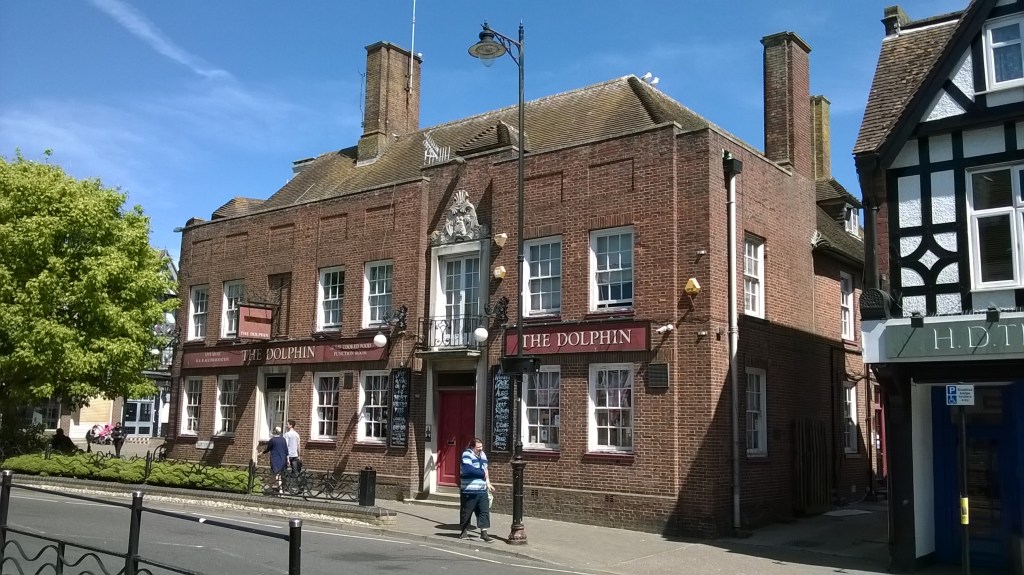
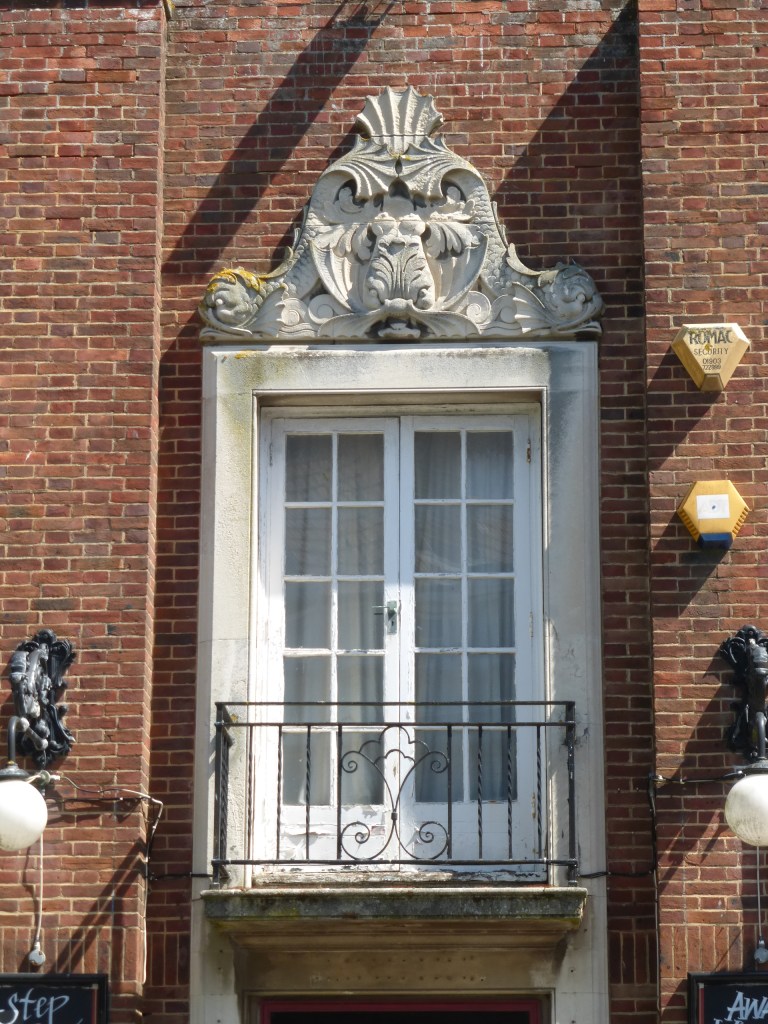
The style is Neo-Georgian again but here more inventively treated, with good massing and elegant details, especially the stone dolphins.
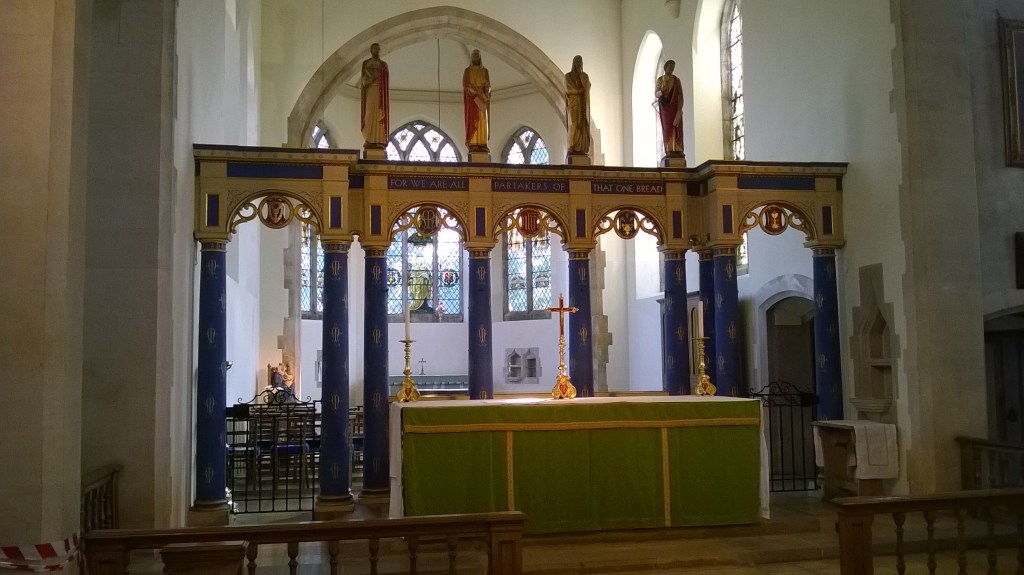
A little known Classical intervention also of the early 1930s was the new fittings inserted in St Mary’s church to the design of Christopher Webb. A pupil of Ninian Comper, Webb here follows his master’s favoured idea of stylistic ‘unity by inclusion’: though the building is Gothic, the fittings are 17th-century in character.
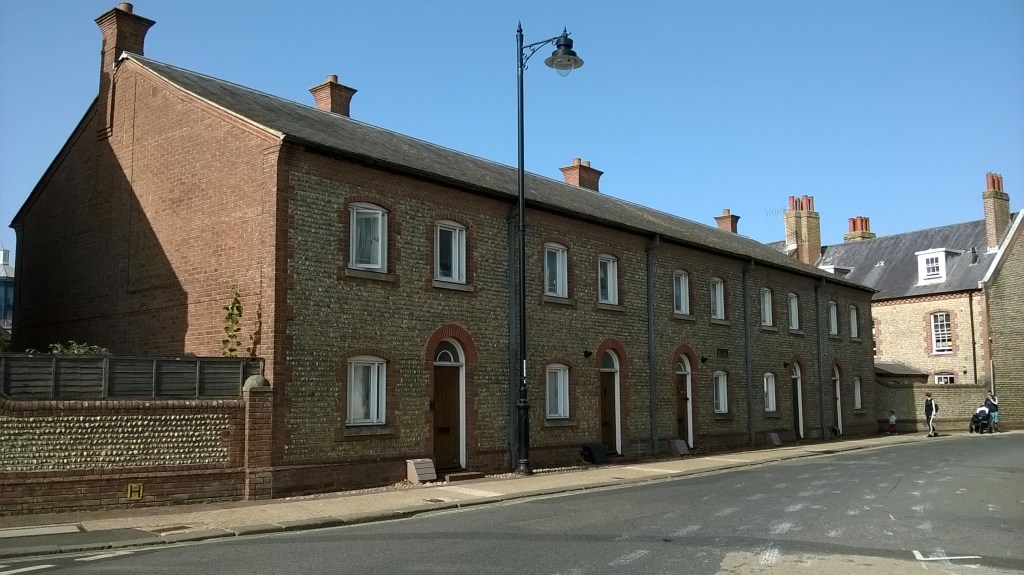
The late 20th and early 21st centuries have seen diverging responses to Littlehampton’s architectural past. Floyds Cottages in Surrey Street of circa 1995 could almost be taken for a terrace of circa 1800. They sit well with an adjacent building which is actually of that date.
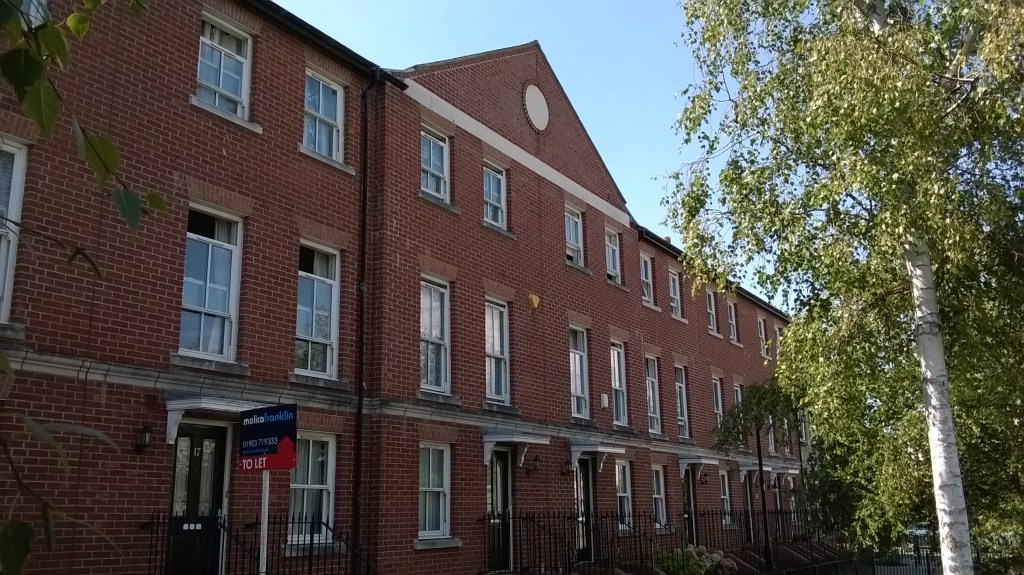
Other recent housing in 18th-century style built nearby in River Road is less convincing.
Elsewhere new structures have preferred to cock a snook at the past.
Plain mid-20th-century brick shelters on the Promenade represented Classicism at its most basic, with vertical courses standing for the bases and capitals of an implied architectural Order.
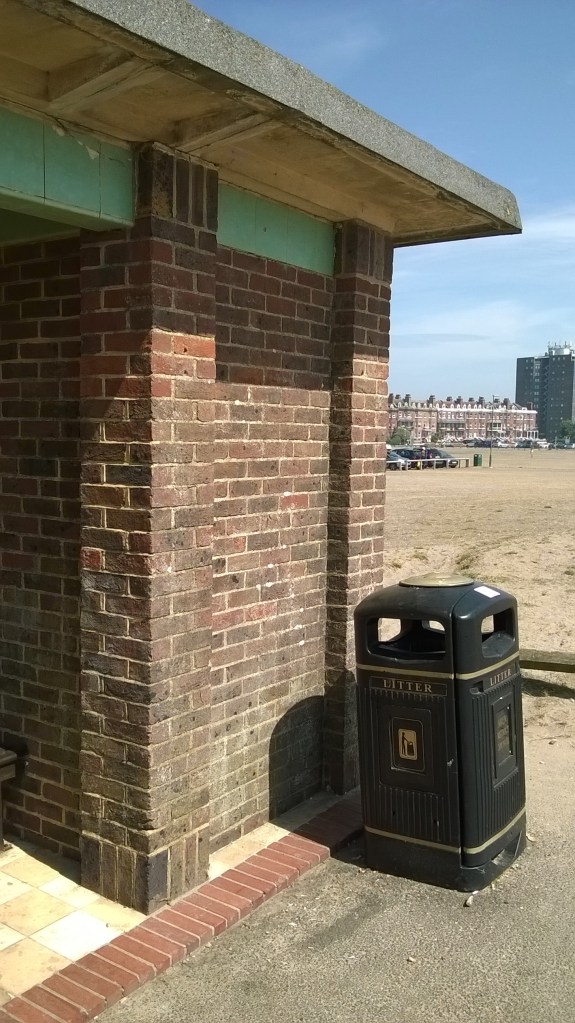
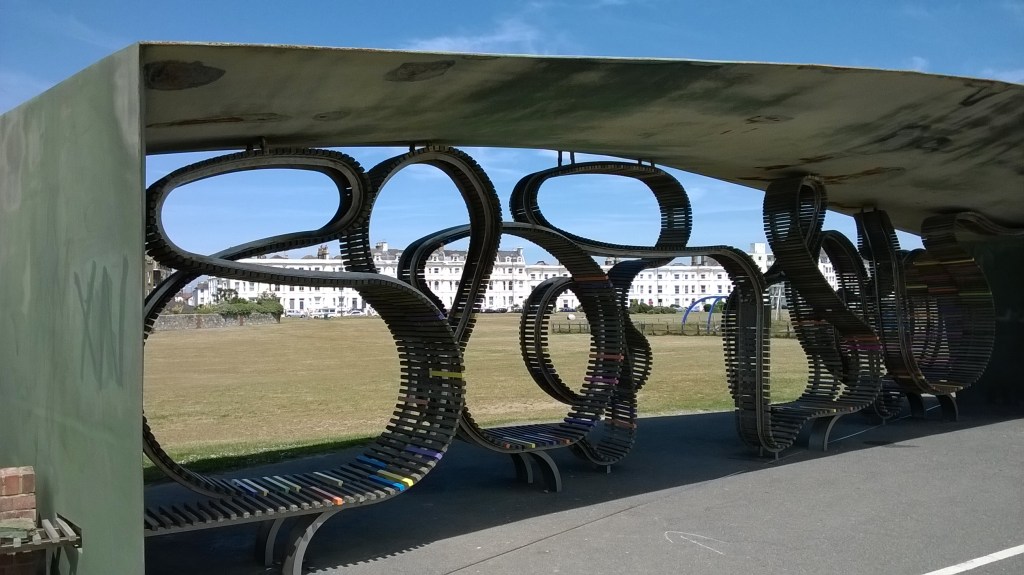
Though one of these still survives, the bizarre constructions that replace two others, with their strange contortions, give no shelter at all from sun, rain or wind.
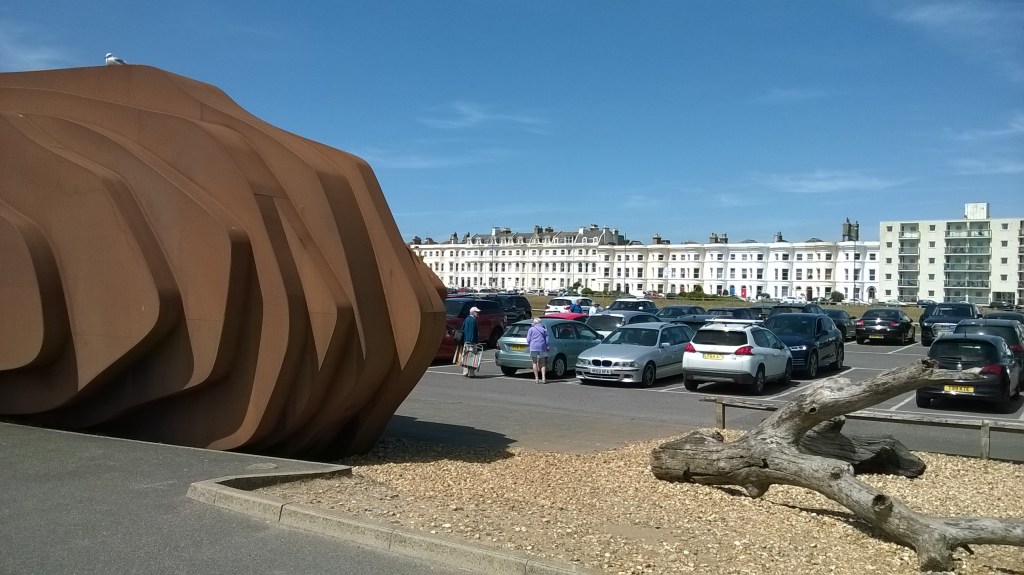
Further east the pre-rusted steel exterior of Thomas Heatherwick’s East Beach Café of 2007 blows a definite raspberry to the surviving terraces of Beach Town. As a café it’s highly rated, but the building has not unnaturally been nicknamed ‘the Slug’.
Images copyright Tim and Ann Hudson.
***********************************
Blog posts to come: Quinlan Terry and Kingsham Farm; Chichester – Renaissance City; Worthing’s seaside; C G Stillman, County Architect; What is Classical architecture?

