War memorials since the early 20th century have often been in Classical style, which in some ways is especially suitable for them. Classical design is based on simplicity, symmetry and the proportion of parts, creating a mood of serenity that easily provokes remembrance. This is enhanced by the abstract geometry of for instance columns and pediments. Also relevant are the funerary overtones of specific details from the Classical tradition, for instance urns, wreaths and obelisks.
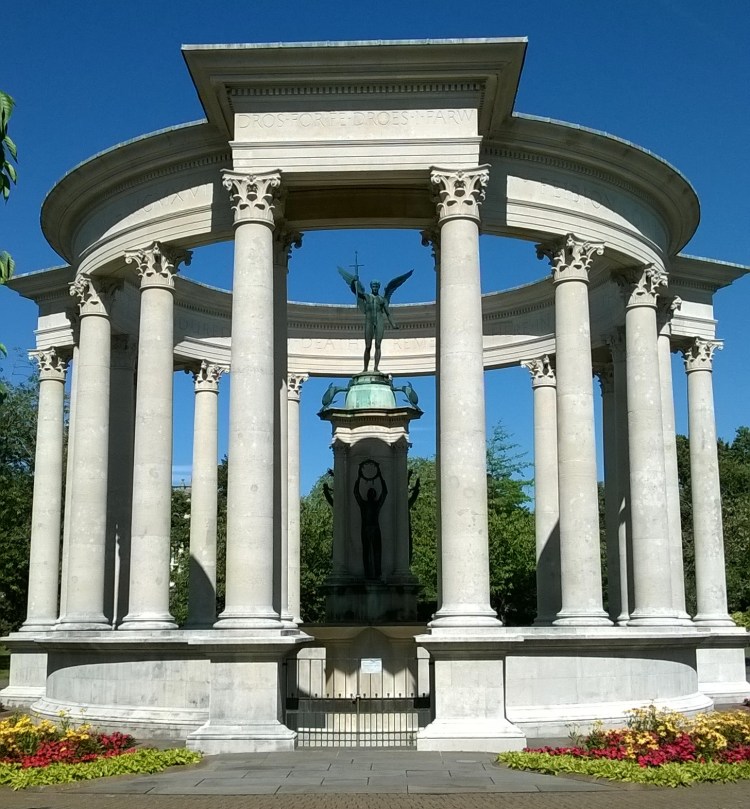
Two well-known monuments designed by Sir Edwin Lutyens are the Cenotaph in Whitehall and the Memorial to the Missing of the Somme at Thiepval in France. Almost as impressive is the war memorial at Cardiff, designed by Sir Ninian Comper – the only secular work by this major church architect.
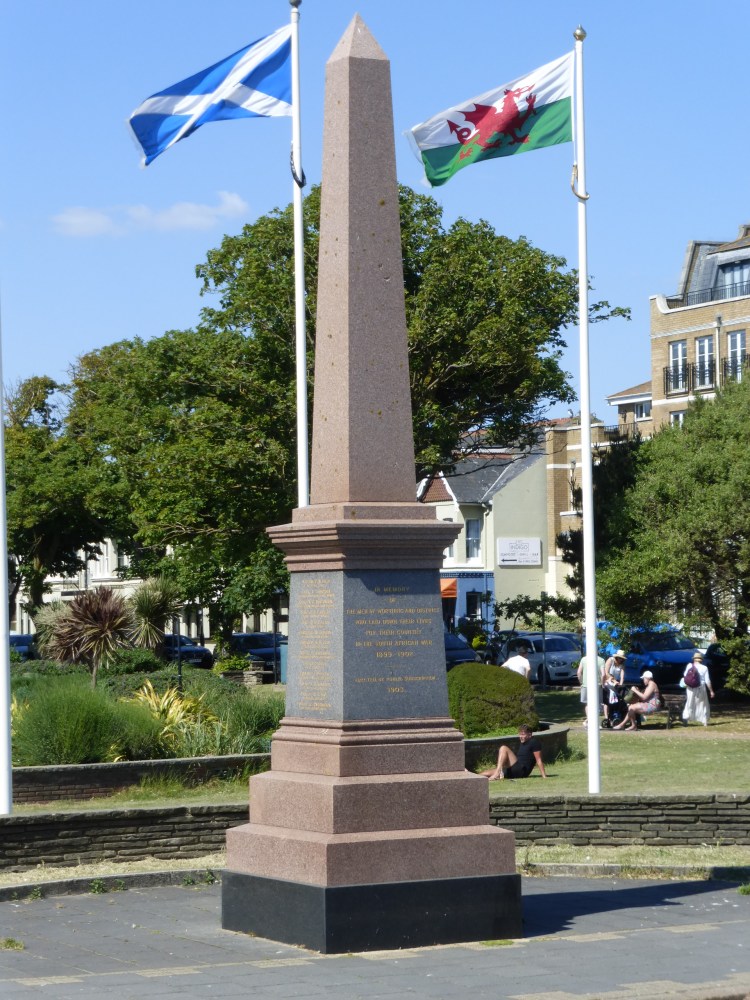
The prominent Boer War memorial in Worthing, between the Steyne gardens and the sea, is in the form of an obelisk in granite, offset by fine gold lettering.
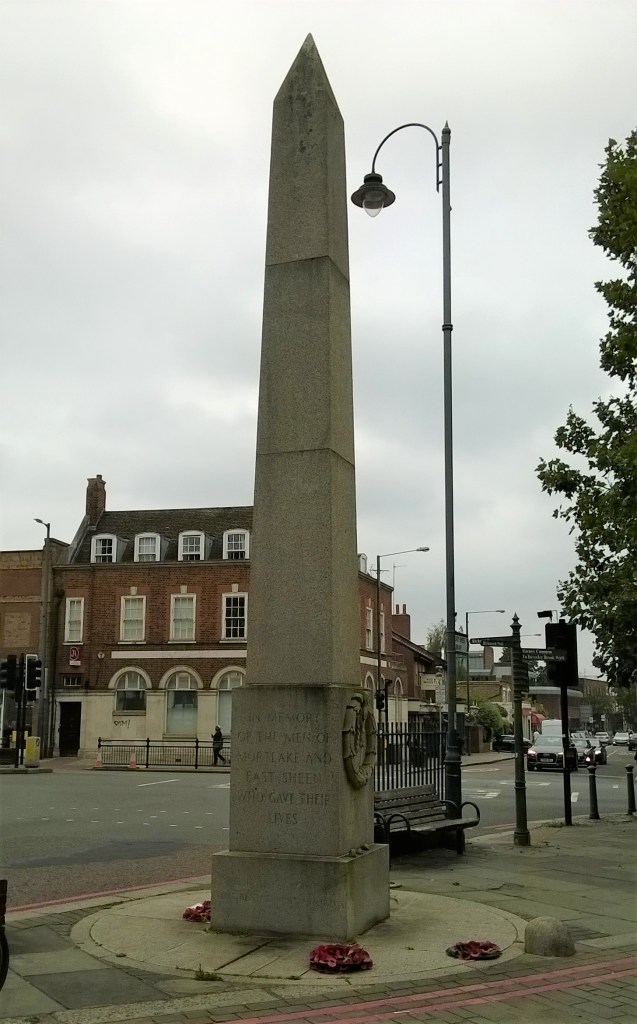
A First World War example of an obelisk outside Sussex is at East Sheen near Richmond in London, designed by Albert Myers in 1925.
Most Classical war memorials in fact relate to the First World War, though often with added names for the Second World War and subsequent wars.
A very prominent location for such a memorial is the high street of a town.
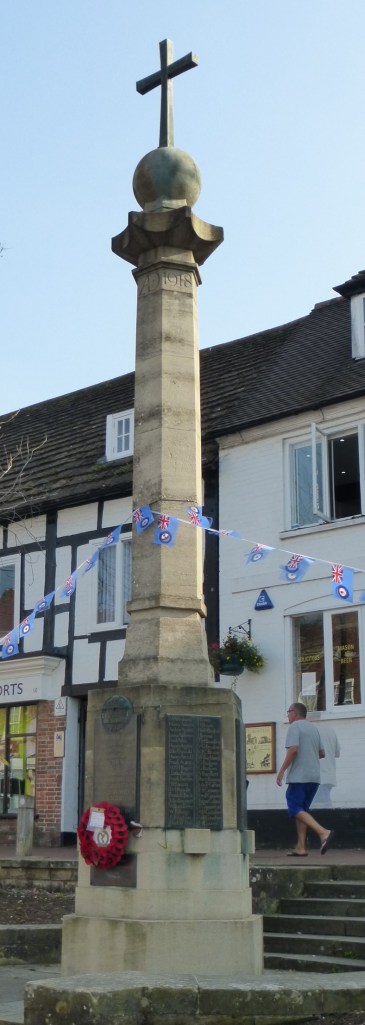
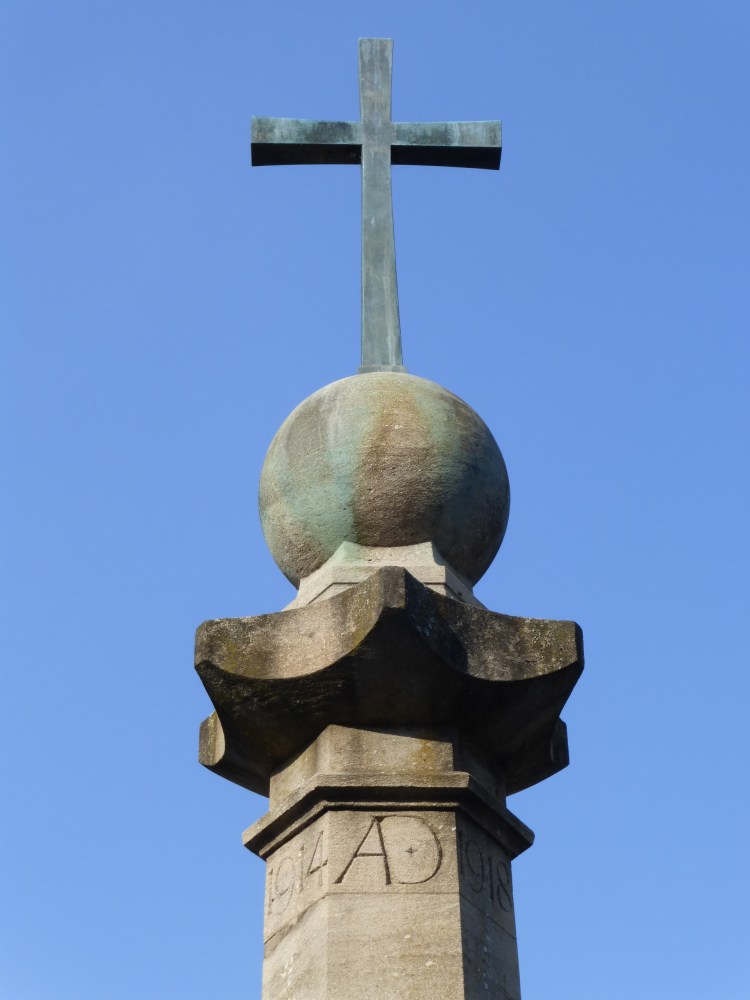
The East Grinstead example of 1922, alongside the town’s main street, consists of a tall polygonal column of Clipsham stone carrying an orb and a cross of gilt bronze. Design was by the sculptor Ernest G Gillick of Chelsea, who also worked on the cenotaph in George Square, central Glasgow.
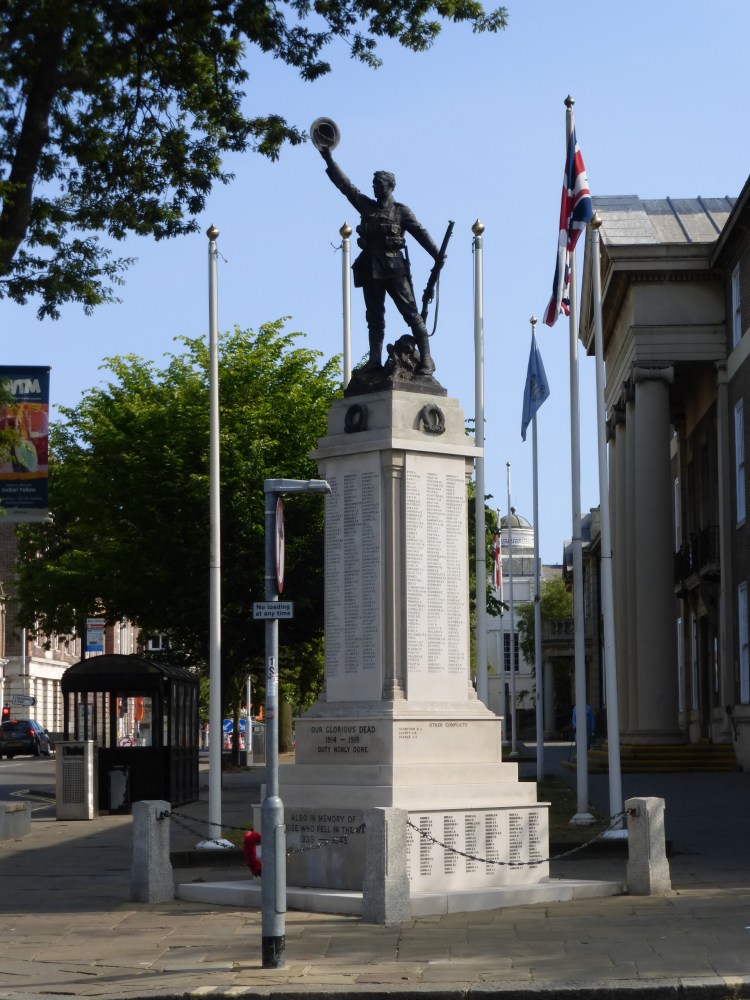
A parallel at Worthing, prominently placed in Chapel Road, is capped by a statue of a soldier holding his helmet aloft in triumph. The fine Classical Town Hall by C Cowles-Voysey, built later, is its backdrop. The designers here were Whitehead & Sons, who used the same idea for war memorials at Chertsey (Surrey) and Stafford.
Though remembrance was at first rightly a secular rather than a religious initiative, another public location was a church or churchyard.
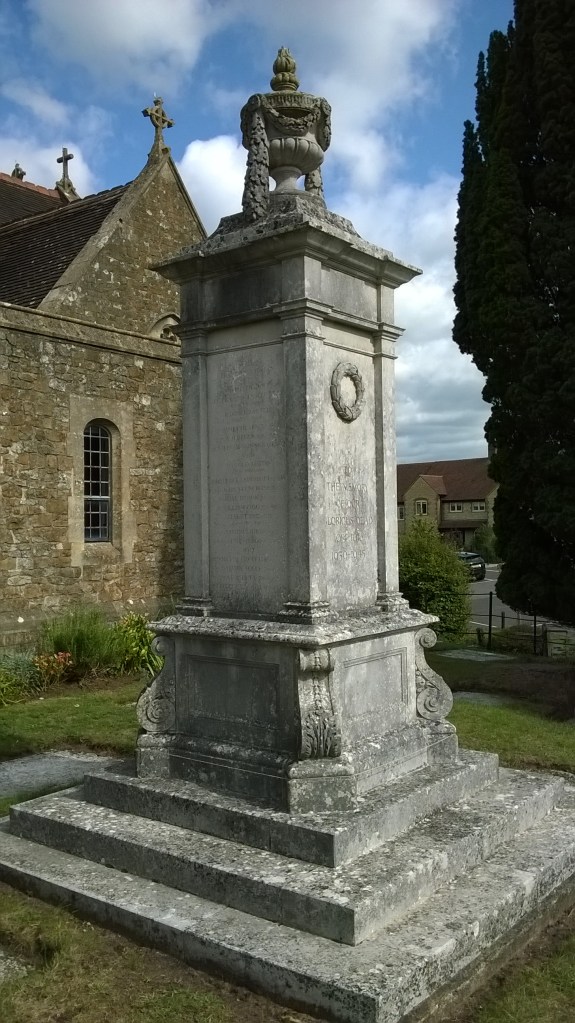
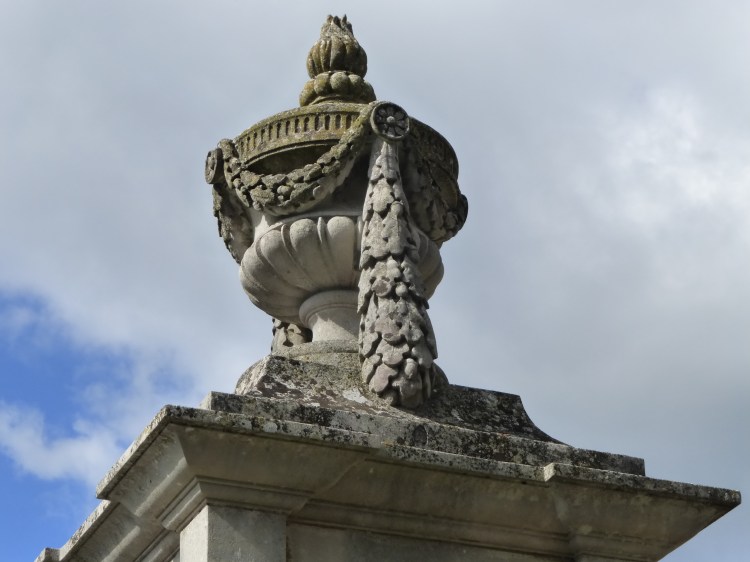
The memorial in Storrington churchyard of 1921 by Sheppard & Hardy is a large subtly-moulded stone pier. This has an urn draped in garlands as its crown, a wreath prominently placed on its main face, and scrolls or consoles as part of its base. The pier is inscribed with the names of all 41 parishioners who died in the First World War, together with another 20 names from the Second World War and later conflicts.
At Lindfield the war memorial was constructed in 1922 to the design of Sir Ninian Comper, who had local connections. It sits on the churchyard wall itself, for visibility from the main road of the village. It is in Comper’s characteristic style, predominantly Gothic but incorporating Classical elements. Thus, while it consists of a tall, tapering Gothic cross in Clipsham stone, there are Baroque consoles at its foot. The sculptural elements are by Comper’s regular collaborator William Drinkwater Gough.
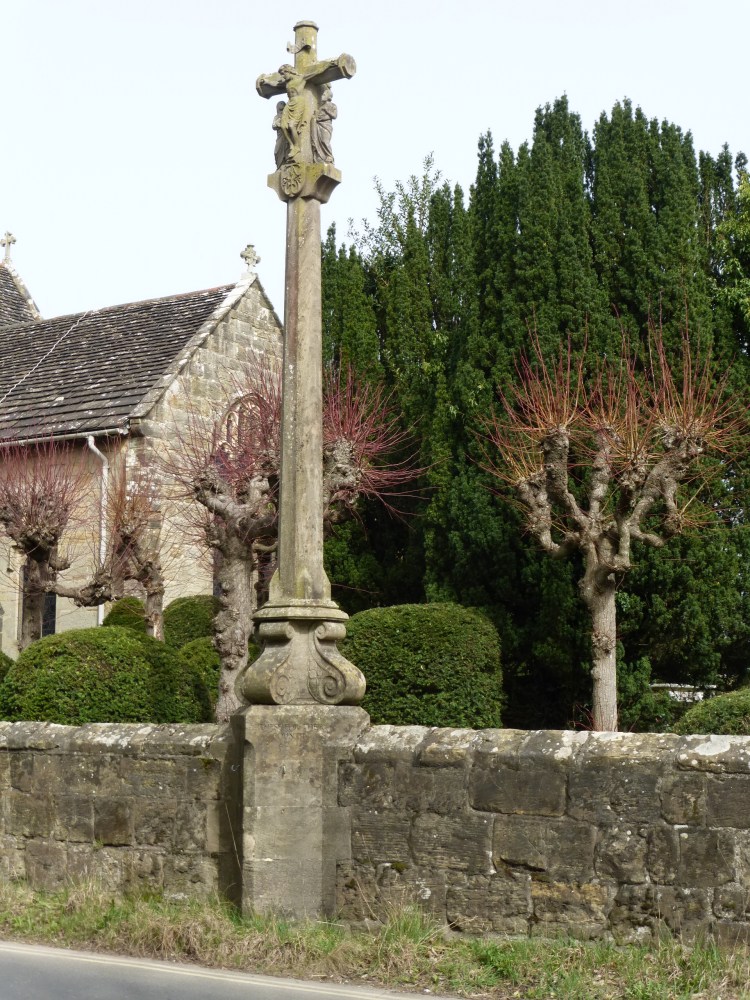
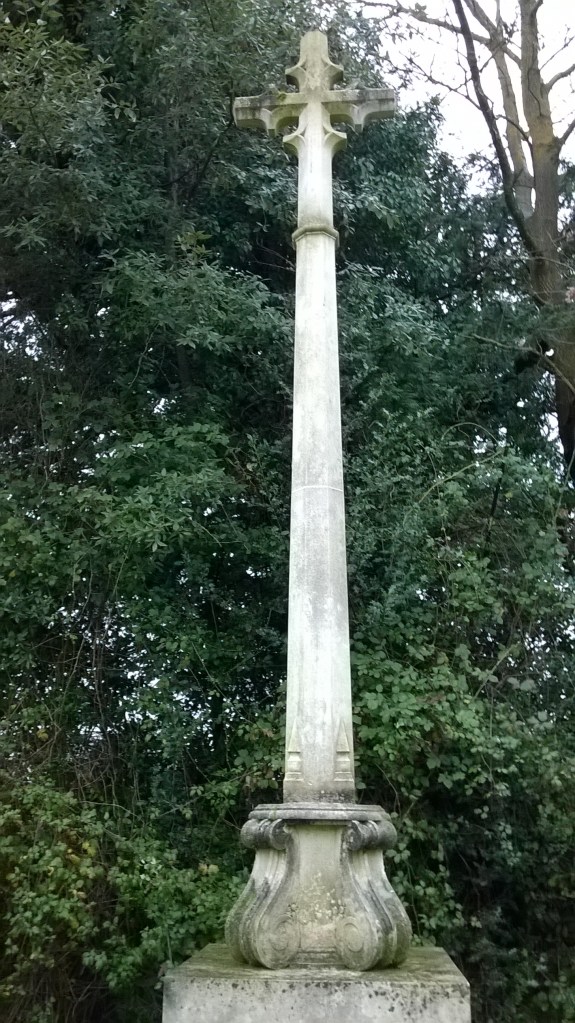
Comper’s son Sebastian seems to have been the designer of a very similar memorial in Petworth’s Horsham Road cemetery. Erected in 1952, this commemorates the many killed, mostly children, in an air raid on the town’s primary school in 1942.
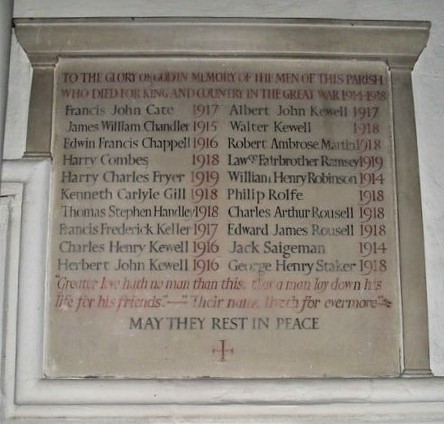
A simple example of a memorial inside a church is the squarish tablet at West Wittering designed by Eric Gill, which makes its effect chiefly from lettering. The selective use of red colour perhaps alludes to the poppies of John McCrae’s famous poem ‘In Flanders Fields’.
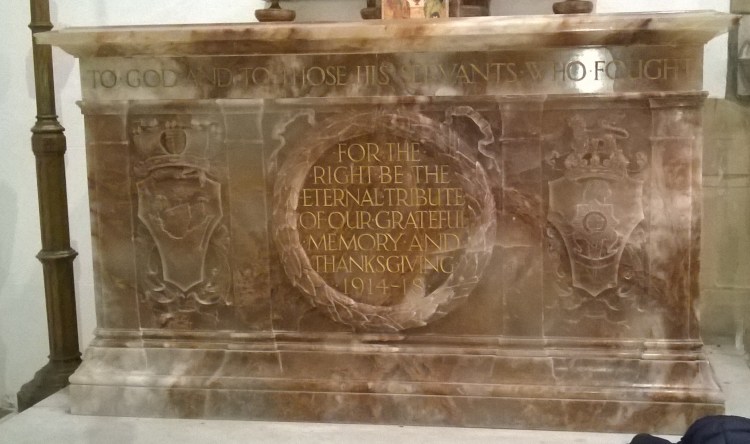
More substantial, in the north transept of Hurstpierpoint church is an ensemble designed by the local architect Walter Godfrey that includes a brown alabaster altar in the form of a tomb chest decorated with a prominent wreath.
Private memorials inside churches are sometimes prominent. The most extraordinary instance is perhaps the full-size equestrian monument to Edward Horner in a chapel of Mells church in Somerset, again by Lutyens.
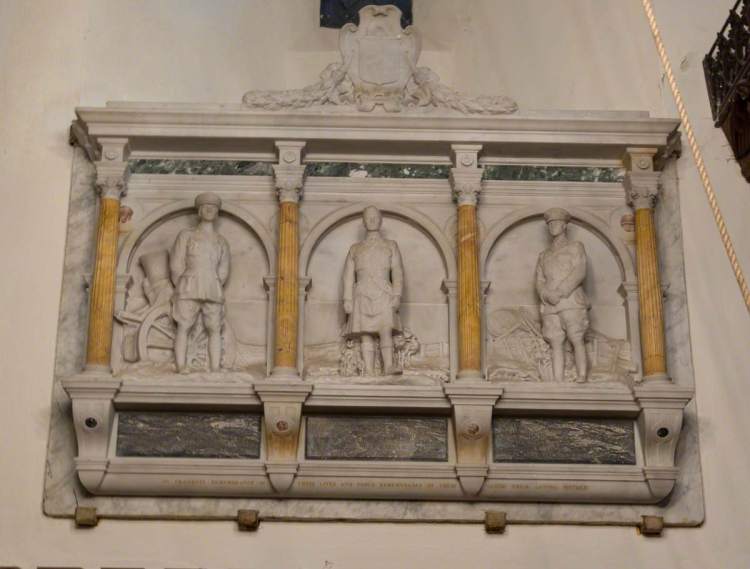
A West Sussex parallel on a smaller scale is the wall monument in Cuckfield church to three brothers of the Kennedy family, all army Captains. They are depicted as freestanding figures against low-relief battle scenes. The architectural framework consists of arches between fluted Composite columns of coloured marble.
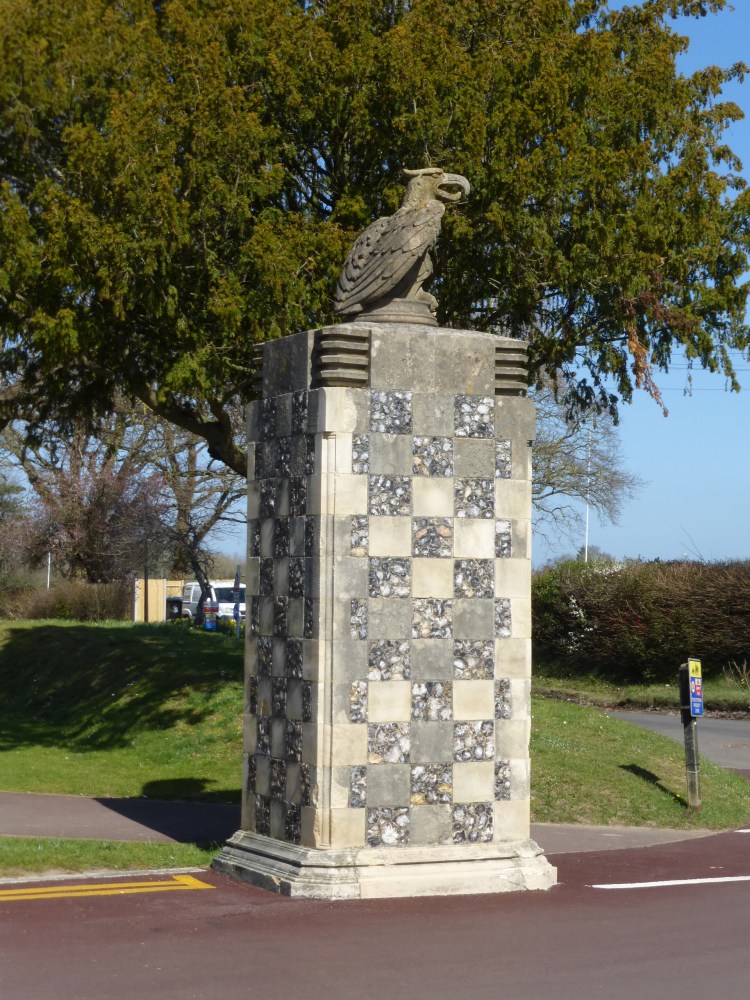
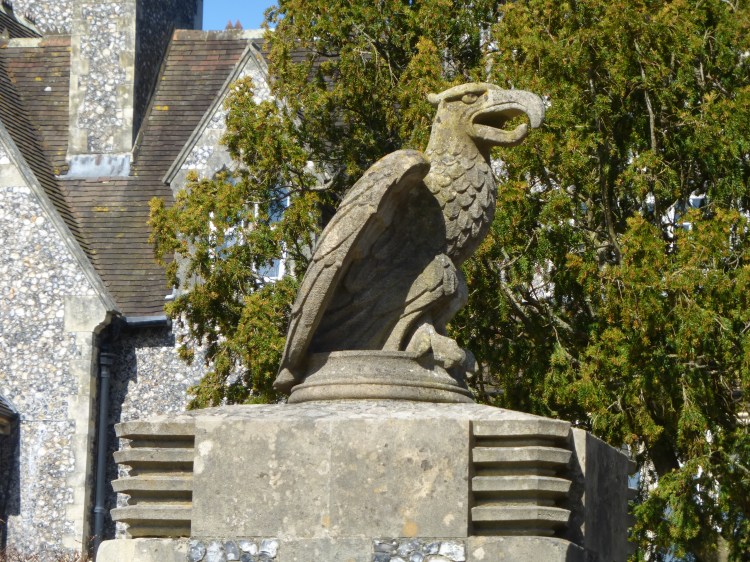
Institutional memorials often feature just lists of names. More unusually, at Hurst College in Hurstpierpoint a Second World War memorial was created in 1949 in the form of gatepiers. Rather in the manner of Comper, these mix Gothic and Classical elements. Though they are in essence Classical pylons their detail, for instance the base mouldings and the corner colonnettes, is Gothic. The architects were the firm of Stanley Roth, Tetley & Felce. The fierce crowning eagles, standing for St John the Evangelist, were carved by the Pole Jan Rylko.
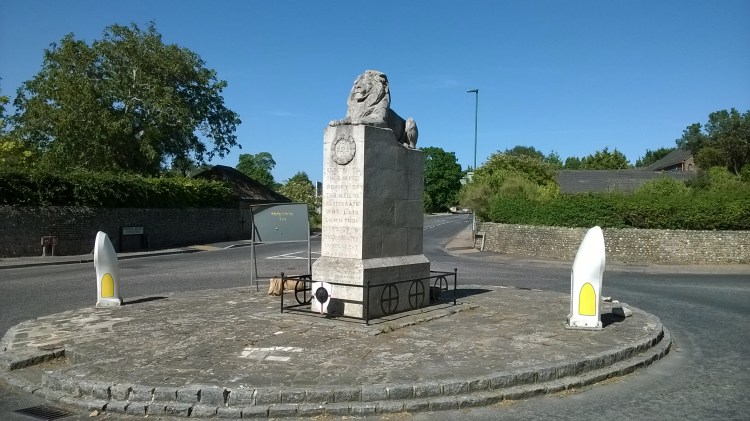
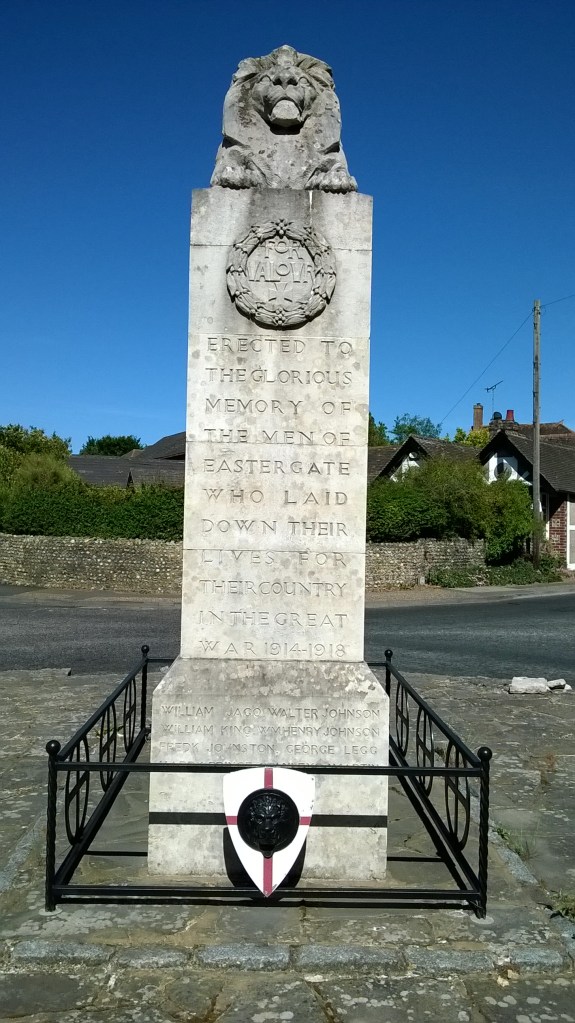
Most remarkable of all West Sussex war memorials, however, is perhaps that of circa 1920 at Eastergate, designed by the sculptor Morris Harding, famous for his depiction of animals. At a junction of major roads this takes the form of a tall oblong pier. Its front face bears a wreath, and it is crowned by the proud sculpture of a lion, a most notable addition to the local scene.
Images © Tim and Ann Hudson except as stated.
*********************************************
Blog posts to come: Post Office Georgian; Garden buildings; What is Classical architecture?


Great stuff, Tim: particularly enjoyed this one! Kind regards, John.
Dr John Godfrey DL +44 7585 225367
>
LikeLike